How to control rice planthoppers? Use acephate to manage planthoppers, targeting the early instar nymph stage.
Rice planthopper is an important pest in the middle and late growth stages of rice. Both adults and nymphs aggregate at the base of rice plants to feed on plant sap, and severe infestations can cause "hopperburn" and lodging, as well as transmit viral diseases such as rice stripe virus. The key to controlling rice planthopper is to target the young nymph stage and deliver the insecticide to the base of rice plants—acephate, which possesses both contact and fumigant activity, is effective in this regard. Yili 30% Acephate EC is registered for use against rice planthopper on rice.
Rice planthoppers are small in size and aggregate in concealed areas at the lower parts of rice plants, often active during early morning, late evening, and overcast days, making them easily missed during spray applications. Coupled with their rapid reproduction and overlapping generations, multiple generations can occur within a single cropping season. Therefore, the principle of "suppressing early rather than late" is emphasized: during the early instar nymph stage, population density is low and insecticide resistance is weak, so targeting this stage is both cost-effective and labor-saving.
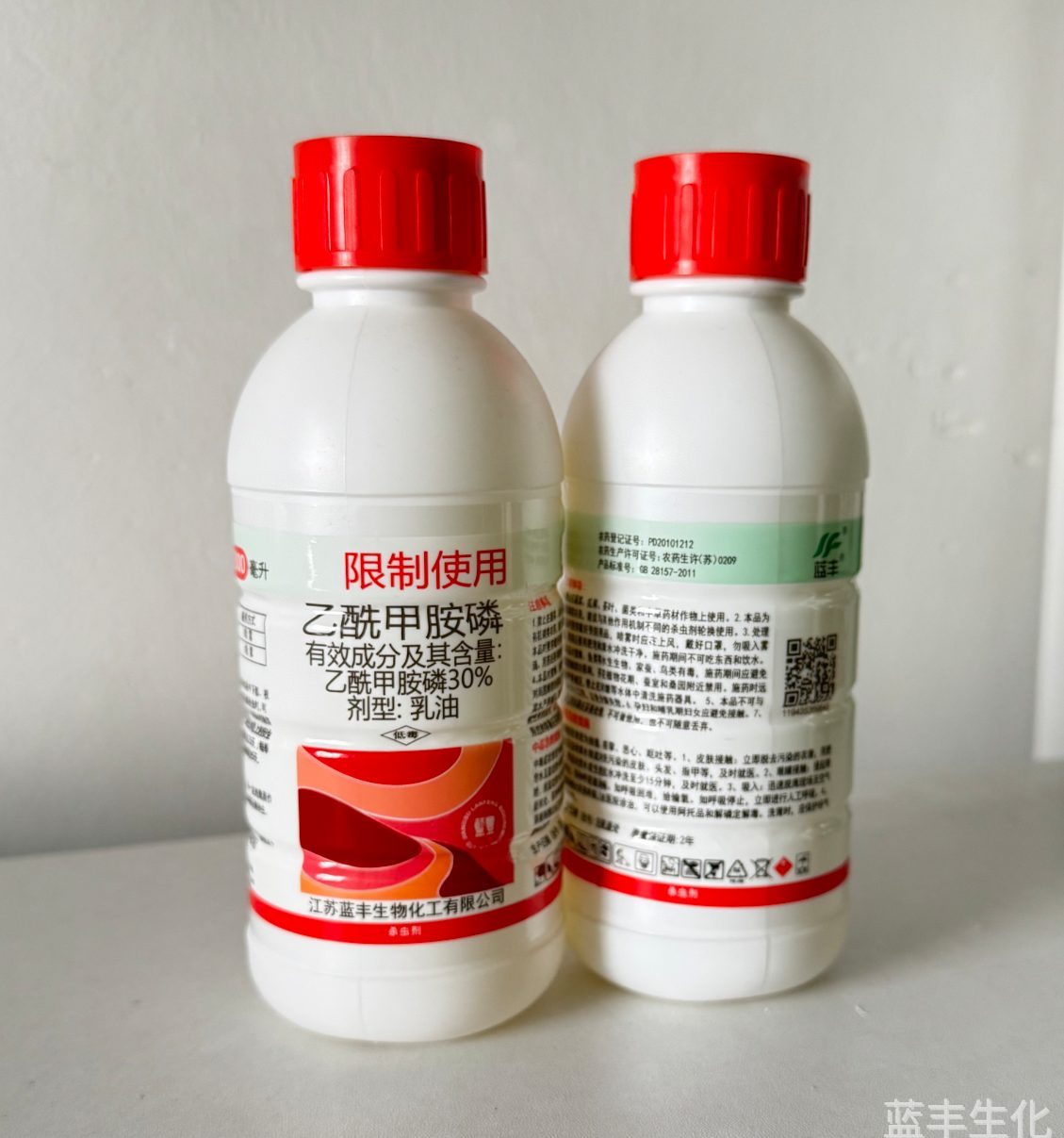
Acephate is an organophosphate insecticide with contact and stomach poisoning effects, ovicidal activity, and a certain degree of fumigant action. It is characterized by a slow-acting mode of action and moderate persistence. Yili 30% Acephate Emulsifiable Concentrate (EC) is registered for the control of rice planthoppers (Nilaparvata lugens and Sogatella furcifera) in paddy rice. The recommended application rate is 150–225 mL per mu (1/15 hectare), diluted with water and applied as a foliar spray. Application should be timed to the early nymphal instar stage of the rice planthopper, with emphasis on spraying the middle to lower portions of the rice plant. Reapply at approximately 10-day intervals depending on pest pressure, with no more than two consecutive applications.
When applying insecticides for planthoppers, which inhabit the base of rice hills, ensure sufficient water volume and lower the spray nozzle to deliver the spray solution to the middle-to-lower parts of the rice plants and near the water surface in the paddy field—avoid spraying only the upper leaves. Integrated management can be enhanced by combining agricultural practices such as temporary field drainage for sunning and conservation of natural enemies. Adhere to the pre-harvest interval (PHI) when applying pesticides, and use with caution in paddy fields with aquaculture. Always follow the label instructions for specific usage.