How to control wheat Fusarium head blight? Use "Thiophanate-methyl + Thiram" to manage wheat Fusarium head blight — do not wait until the disease spreads over a large area before spraying.
Fusarium head blight (FHB) is a common disease of wheat, with its incidence closely associated with overcast and rainy weather as well as high humidity. Upon infection, it causes leaf lesion development and premature defoliation, thereby reducing yield. The management of FHB emphasizes early prevention and the selection of appropriate fungicides—Thiram·Thiophanate-methyl 50% WP is registered for the control of FHB on wheat and can be applied by foliar spraying according to the label instructions.
Fusarium head blight of wheat typically first shows symptoms on the leaves, with lesions developing from the lower to the upper part of the plant and increasing in number over time. In the early stage, the symptoms are inconspicuous; by the time the lesions coalesce into larger patches and spraying is initiated, it is often already too late. Therefore, frequent field scouting is essential—apply the first fungicide spray as soon as lesions are first observed on the wheat, so as to suppress the pathogen at its source.
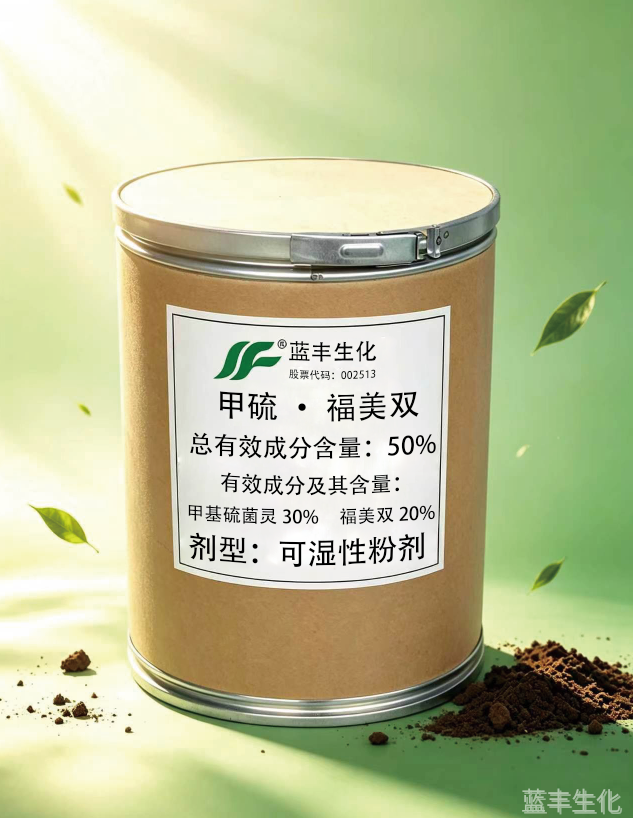
Methyl thiophanate-thiram 50% WP (Wettable Powder), Registration No. PD20084441 (subject to the actual label). Primarily used for controlling wheat Fusarium head blight (scab). Apply at a rate of 120–160 g per mu (667 m²) as a foliar spray with sufficient water. Spray at the early stage of disease development, and a second application may be made at an interval of 7–10 days depending on disease severity. Ensure adequate water volume and thoroughly wet the infected plant parts.
For fungicides such as thiram·methionine wettable powder, prolonged continuous use may lead to the development of pathogen resistance. It is recommended to rotate with fungicides of different modes of action. The specific dosage and water volume should be based on the product label, as local crop varieties and weather conditions vary—do not directly copy application regimens from other regions.